Evergreen Growth & Marketing - B2B LinkedIn Ads Agency
    All case studies
    🎓Training & DevelopmentActive, monthly reporting

    Professional Training Provider: 11.7X Return

    Roughly 11.7X blended return in five weeks, up from 7.7X on Google alone.

    Case study: training & development

    Ads at breakeven. Bookings nobody could trace. A diary that should have been fuller.

    • Google account at breakeven when we took it over
    • 7.7X on Google alone after the rebuild
    • ~11.7X blended once LinkedIn was added
    • 20 courses booked in five weeks
    Google SearchLinkedIn AdsSponsored Messaging
    ~11.7X
    Blended Return
    7.7X
    Previous (Google only)
    20 in 5 weeks
    Courses Booked
    43.3% vs ~30% norm
    Message Open Rate

    The story

    Breakeven to 7.7X to 11.7X

    If you run a training business, this probably sounds familiar. The ads go out every month, bookings come in, and nobody can prove which pound caused which booking. This provider was exactly there: Google Ads at breakeven, every booking landing in the analytics as 'direct', LinkedIn never run properly. The diary should have been fuller, and the marketing could not explain why it was not.

    The fix had an order, and the order is the point. You cannot improve what you cannot measure, so tracking came first: every booking traced back to the ad that caused it. Then Google, because that was where the money was already leaking. Rebuilt around the searches people type when they are ready to book, not browse, it went from breakeven to 7.7X. Only then did we add LinkedIn, aimed at decision makers whose teams need training and at everyone who had visited the site and left without booking.

    That second layer is what turned a rescued account into a growth engine. Twenty courses booked in five weeks, and roughly £11.70 back for every pound spent across both channels. Not more traffic. More revenue, from buyers the old setup never reached.

    1

    Make the numbers honest

    Bookings were being credited to 'direct', so no channel could prove its worth. Rebuilding conversion tracking came first. Only then did the 7.7X versus 11.7X comparison mean anything.

    Attribution: before

    Bookings disappearing into 'direct'

    After

    Every booking traced to the ad that caused it

    2

    Rescue Google: breakeven to 7.7X

    The account was running at breakeven when we took it over. Rebuilt around the high-intent course searches buyers actually make, with honest tracking underneath, Google alone returned 7.7X the month before LinkedIn launched.

    Google return: before

    Breakeven when we took it over

    After

    7.7X the month before LinkedIn launched

    3

    Add LinkedIn, don't replace Google

    Google kept catching the people already searching for courses. On LinkedIn we went after the two audiences we knew would convert: decision makers in the industries that booked most often, chosen because their teams need this training, and retargeting of everyone who had reached the site from a Google Ad or an organic search and left without booking. Warm audiences, direct creative. Adding that second layer lifted the blended return by more than half.

    • Intent: Google Search on high-intent course terms.

    • Who: LinkedIn targeting of decision makers in the highest-converting industries, the ones whose teams need training.

    • Warm: Retargeting site visitors who arrived from Google Ads or organic search and left without booking.

    • Inbox: Sponsored Messaging straight into those decision makers' LinkedIn inboxes.

    Message open rate: before

    ~30% platform norm

    After

    43.3%

    4

    Make one booking worth four

    Group offers changed the maths of every booking. Same ad spend, bigger orders. When you only look at cost per click you'd never find that lever.

    Blended return: before

    7.7X on Google alone

    After

    ~11.7X across both channels

    Five weeks of Google alone, then five with LinkedIn on top

    The first five weeks are the rebuilt Google account running by itself at 7.7X. The moment LinkedIn switches on at week 6, bookings and revenue step up to a level Google never reached on its own.

    Weekly bookings, ad spend and tracked revenue. Weeks 1 to 5 are the rescued Google account on its own. From week 6, LinkedIn is running alongside it.
    Before we took over

    Breakeven

    Google alone, weeks 1-5

    7.7X

    Both channels, 5 weeks

    ~11.7X

    The result

    Twenty courses booked in five weeks, tracked online sales well into five figures, and a blended return of roughly 11.7X across both channels. Put plainly, every pound that left the ad account came back as about £11.70 in booked revenue. Google alone had reached 7.7X the month before, and breakeven the month before that. Clicks and open rates are nice to look at. This campaign was judged on the money.

    7.7X to 11.7XGoogle Search • LinkedIn Ads • Sponsored Messaging

    The creative

    The ads that did the work

    Buyers are trusting someone with their confidence, or their team's. The advertorial led with why this trainer is worth trusting. That's a better opening than a discount code.

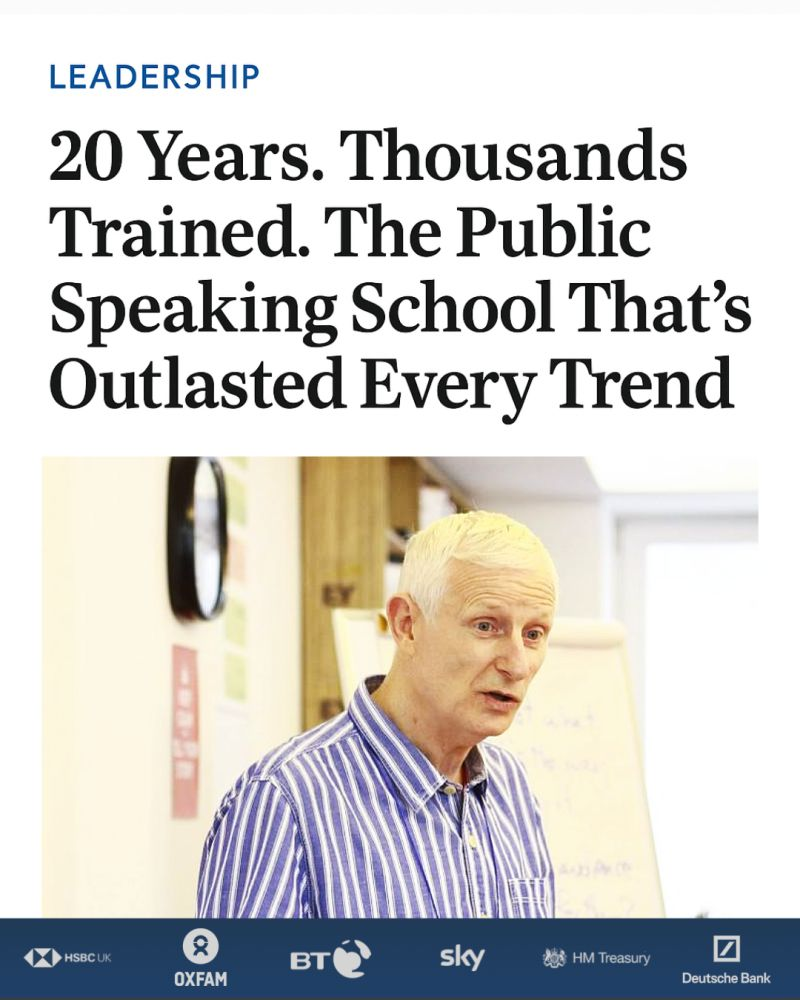
    News-style advertorial ad about an expert public speaking trainer

    The exposé advertorial

    A news-style article ad built around the authority of the lead presenter: years of experience, thousands trained, the organisations that have sent people.

    Why it worked: People are nervous about choosing a speaking coach. A story about the trainer builds trust before anyone clicks, so the course page only has to confirm what the ad already said.

    The exposé advertorial format: the trainer's authority, told as a story.

    POV ad showing a nervous man in a boardroom with a 4 for 3 group offer sticker

    POV images

    Images showing the moment people dread: the sweaty palms before a presentation, the nervous trainer in front of a room.

    Why it worked: Nobody buys public speaking training because of a course outline. They buy it because of that feeling. Showing the feeling gets the scroll to stop.

    POV image plus the group offer. The feeling first, then the deal.

    Example mockup: LinkedIn message ad
    HT
    Head Trainer, Public Speaking School
    Sponsored

    Hi Sarah, quick one.

    What's the one thing that worries you most when you have to present to the board or a big room?

    Just tap a reply below. I'll send you the one thing we teach that fixes it.

    Freezing upNerves beforehandKeeping people interestedSomething else
    Illustration of the format. Not the client's real ad or data.

    A message about their biggest fear

    Sponsored messages asking decision makers what their biggest fear is about speaking or presenting.

    Why it worked: A question is easy to answer. It opened at 43.3% because it read like a person asking, not a brochure.

    4 for 3

    One booking brings four people. Same ad spend, bigger orders.

    Bulk group offers

    Partway through, we introduced group offers for teams and pushed them hard across the ads.

    Why it worked: One booking that brings four people is worth far more than one person. This is how we raised volume and return together instead of just buying more clicks.

    Your competitors are one rebuild away from this

    Right now, a training provider in your market is either guessing like this one was, or measuring like this one is now. The buyers are the same. The budget is probably similar. The difference is that one of them knows exactly which ad filled which seat, and spends next month's budget accordingly.

    Every month at breakeven is not neutral. It is a month of spend that taught you nothing, a month of bookings you cannot trace, and a month a competitor could be using to put their name in front of your buyers on LinkedIn, where you are not showing up.

    Five weeks after the tracking went in, this provider had 20 courses booked and a channel mix returning roughly 11.7X. A few months from now your diary either looks like it does today, or it fills with bookings you can trace back to the pound. Book a call and we will tell you straight whether this approach fits your business.