How to Create Scroll-Stopping Ads for 'Boring' B2B Industries ⚡
Your industry isn't boring, your ads are. Industrial equipment, logistics software, financial services... they can all create scroll-stopping content. Here's exactly how.
New to B2B advertising?
Whether you've never run an ad or you've burnt through £10K with nothing to show for it, this guide will help you create ads that actually get clicked. No jargon, no waffle.
Here's the truth: your industry probably isn't boring. Your ads are.
Industrial machinery. Logistics software. Financial compliance. Technical B2B services. None of these are inherently dull, but 99% of ads in these sectors look identical. Generic stock photos, vague headlines, zero personality.
Here's What's Actually Happening
People don't scroll past "boring" industries. They scroll past boring creative. Manufacturing can be fascinating. IT services can be compelling. Logistics can be dramatic. You just need to show it the right way.
The campaigns that work have nothing to do with the industry and everything to do with the creative approach.
🎯 What Makes a B2B Ad Scroll-Stopping?
Three non-negotiable elements. Master these and even precision fasteners become unmissable.
1. Tension (The Pattern Interrupt)
Tension stops the scroll. Contradiction, controversy, curiosity, challenge - anything that makes someone think "wait, what?"
❌ Generic (Scroll)
"We provide reliable manufacturing solutions"
✓ Tension (Stop)
"Why your 'reliable' machinery costs you £84K/year"
2. Emotion (Even in B2B)
B2B buyers are still humans. Fear, pride, frustration, ambition - these drive decisions more than specs.
Example: IT/MSP ad showing stressed IT manager at 3am with headline "Your IT guy just quit. Again." — 4.2% CTR. Technical specs ad: 0.3% CTR.
3. Visual Pattern Break
Your creative needs to look different from the 47 other B2B ads in the feed. Bold colours, unexpected images, distinctive layouts.
What works: High contrast, human faces (real, not stock), unexpected angles, bold text overlays, charts that tell a story.
📸 Real-World Examples from "Boring" Industries
Precision Engineering Company
Before:
"High-precision CNC machining services for demanding applications"
Generic, technical, forgettable
After:
"This £3 part failure cost them £340K. Here's why tolerance matters."
Specific, dramatic, creates curiosity
IT/MSP Company
Before:
"24/7 IT support for businesses. Reliable. Professional. Experienced."
Says nothing, offers nothing
After:
"Your IT provider doesn't answer after 5pm. Ours does. Here's the 3am proof."
Calls out pain point, provides proof
Cold Chain Logistics
Before:
"Temperature-controlled logistics solutions you can trust"
Vague, unmemorable
After:
"One degree too warm = £480K spoilage. How we saved a pharma company from disaster."
Stakes are clear, story hooks them in
🎨 The Pattern
- →Specificity beats vagueness (£340K beats "costly")
- →Problems beat solutions (pain first, solution second)
- →Stories beat claims (show, don't tell)
- →Real stakes beat features (what's at risk matters)
Is LinkedIn Right for YOUR Business?
LinkedIn's strengths sound great — but will they actually work for your specific situation?
🛠️ 3 Simple Creative Frameworks You Can Use Today
Framework 1: The Cost of Inaction
Show what it costs to ignore the problem. Hard numbers stop scrollers dead.
Formula:
"[Specific problem] costs you [specific £ amount]. Here's how [your solution] fixes it."
Examples:
- • "Manual inventory tracking costs you 14 hours/week. That's £27K/year."
- • "Downtime from outdated machinery: £840/hour. Can you afford another breakdown?"
- • "Your recruitment process takes 12 weeks. Each week costs you £8K in lost productivity."
Framework 2: The Unexpected Truth
Challenge conventional wisdom or common assumptions in your industry.
Formula:
"Everyone thinks [common belief]. Here's why they're wrong."
Examples:
- • "Most manufacturers think automation is expensive. It's not. Inaction is."
- • "You think outsourced IT costs more? In-house IT costs £140K more per year. Here's the maths."
- • "Trade shows aren't dead. But the way you're doing them is."
Framework 3: The Comparison Hook
Compare your solution to the status quo with specific outcomes.
Formula:
"[Old way]: [bad result]. [Your way]: [good result]."
Examples:
- • "Spreadsheets: 8 hours/week, 23% error rate. Our software: 45 minutes/week, 0.3% errors."
- • "Old machines: 18% downtime. New machines: 2% downtime. Same output, £84K savings."
- • "Reactive IT: 4-hour response time. Proactive IT: problems fixed before you notice them."
💡 Start Simple
Pick ONE framework. Create 5 ads using it. Test them. Once you find what works, double down. Don't try to be clever with all three at once.
Watch Free B2B Ad Tutorials
Campaign breakdowns, creative strategy, and LinkedIn Ads walkthroughs — straight from a practitioner, not a guru.
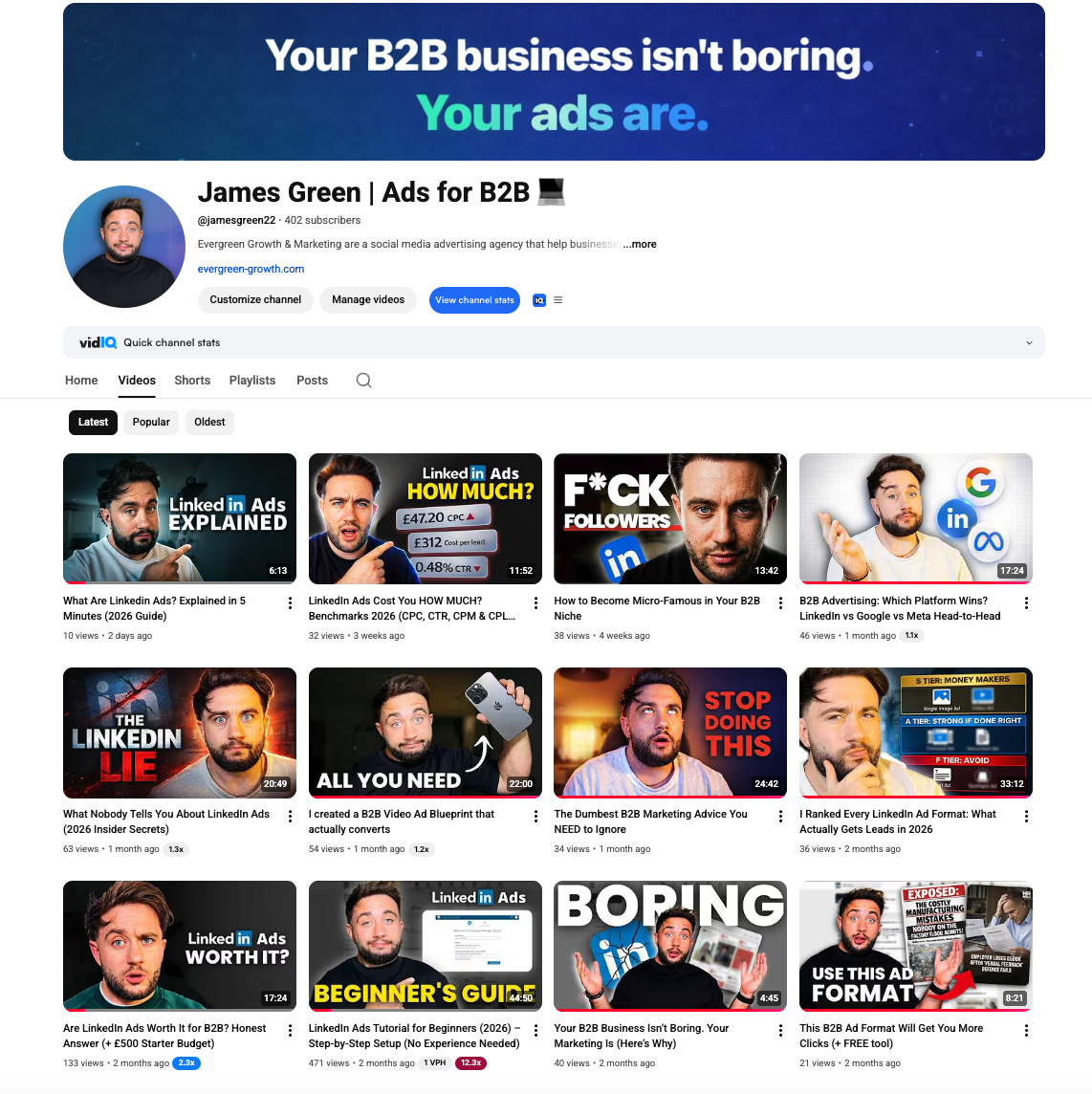
James Green | Ads for B2B
Free B2B advertising tutorials, LinkedIn Ads breakdowns, and creative strategy
Frequently Asked Questions
Common questions about creating scroll-stopping ads for B2B industries.
Your Industry Isn't Boring. Let's Prove It.
We help 'boring' B2B businesses create ads that actually convert. Manufacturing, IT/MSP, logistics, industrial - if your competitors' ads are forgettable, yours will stand out.
Our frameworks turn technical features into scroll-stopping stories
CNC machines, IT services, logistics - we've made them all work
CTR increases of 300-1000% are normal when creative is done right
Free consultation - see examples from your industry
Related Tools & Resources
LinkedIn Ads Budget Calculator
Estimate your CPL, expected leads, and break-even deal size
LinkedIn Ads Benchmarks UK 2026
Complete CPC, CPM, CPL data by industry with expert commentary
Tracking Pixels Setup Guide [2026]
Complete guide to LinkedIn Insight Tag, Meta Pixel, and GTM setup