Starting late?
Use the first unfinished step below. If the event has finished, start at 48 hours after. The useful window has not closed just because the stand has come down.
4 weeks before
Build the audience
- List the customers, opportunities and dream accounts likely to attend or exhibit
- Add relevant companies from the public exhibitor list
- Layer buying roles and seniority over the company list
- Switch Audience Expansion off
3 weeks before
Publish the point of view
- Choose the founder, engineer or consultant who will be visible at the event
- Publish one useful opinion or prediction about the event topic
- Sponsor it as a Thought Leader Ad to the named audience
- Install the Insight Tag and check the important pages are tracked
2 weeks before
Give people a reason to find you
- Show a real demonstration, useful checklist or specific problem you can help with
- Use the stand number as supporting information, not the whole message
- Offer a sensible next step such as a booked demonstration or focused conversation
- Share engaged companies with sales before the event
Event week
Capture and distribute
- Post one useful observation each day from a real person
- Film buyer questions, short demonstrations and permitted interviews
- Put spend behind the strongest post while the event is still relevant
- Keep targeting fixed to the companies and roles that matter
48 hours after
Sort the follow-up by account
- Group contacts, notes and engagement by company
- Send the promised follow-up, not a generic thanks-for-visiting email
- Create retargeting audiences from relevant visitors and content engagement
- Give sales the account context and agreed next action
Weeks 2 to 8
Keep the event working
- Turn repeated questions into posts, clips and landing-page content
- Move the adverts from event recap to buyer problem, proof and next step
- Watch which named accounts return or involve more people
- Measure qualified conversations, opportunities and pipeline over the sales cycle
A workable creative brief
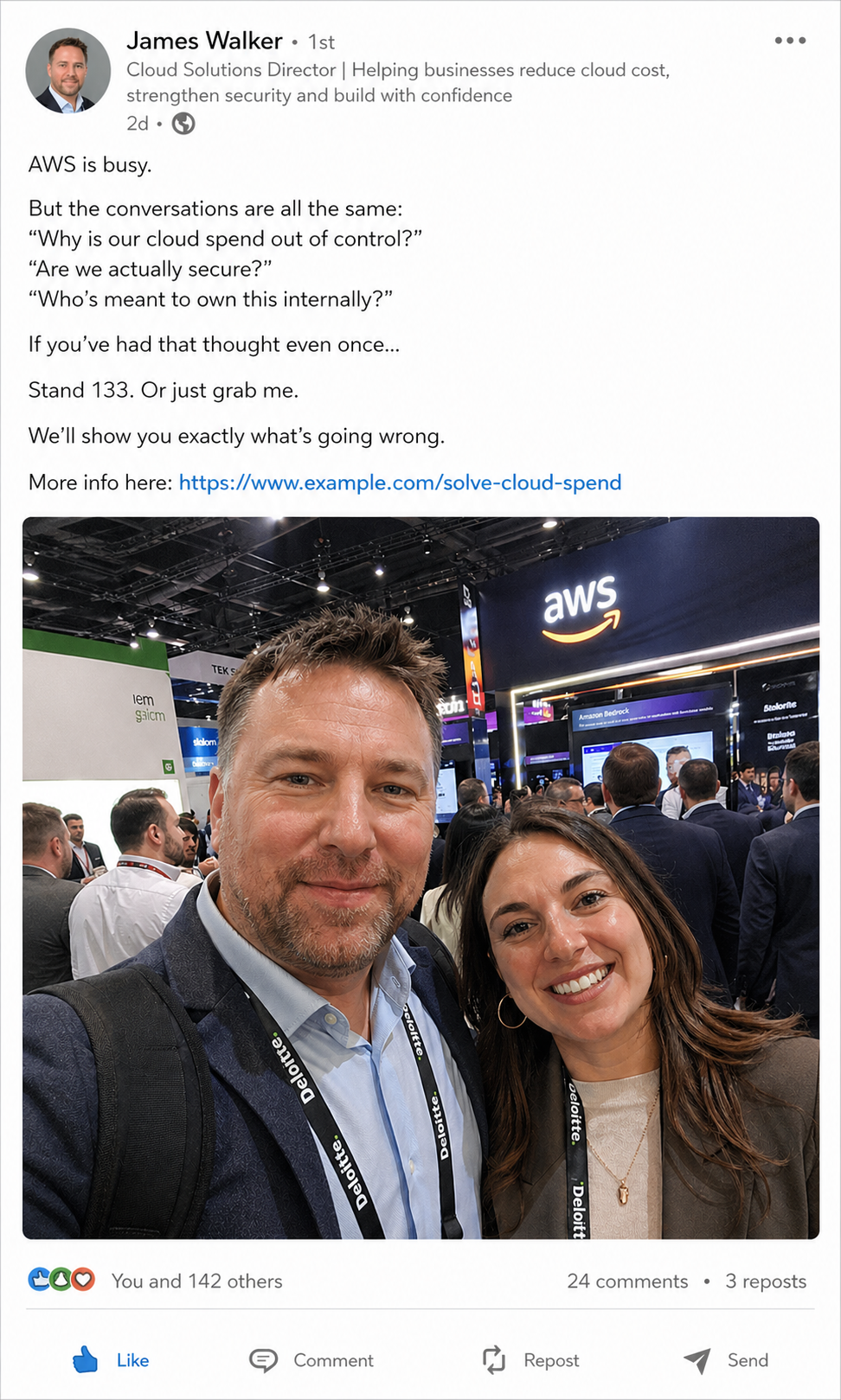
A real person beats a corporate event poster
Use a founder, engineer or specialist who will actually be there. Give them one useful thing to say. Point the sponsored post at the named accounts and buying roles you want to meet.
The stand number can sit at the end. It should not be the only reason the advert exists.
If the audience is too small
Do not solve a tiny audience by allowing LinkedIn to wander into irrelevant companies. Use the company filter for a small named list, combine closely related event and target-account groups where sensible, and let outbound do the one-to-one work alongside paid visibility.
For the exact list options, read how to build a B2B target account list. Audience Expansion should remain off.
What to hand sales after the event
Need the content ideas as well?
The full B2B event amplification guide covers vox pops, useful physical leave-behinds, measurement and the broader before, during and after strategy.
Read the complete guideWant the bigger picture? Read how to turn one event into twelve months of pipeline.
LinkedIn event advertising FAQs
How early should LinkedIn event advertising start?
Four weeks gives enough time to build recognition, but a useful campaign can still start later. Use the first unfinished step in the timeline.
Can we start after the event?
Yes. Begin with the companies, conversations and content you already have, then run relevant follow-up and retargeting while the event is still familiar.
Who should appear in the adverts?
Use the founder, engineer, consultant or specialist who has a credible point of view and will actually be visible at the event.
Should we advertise the stand number?
Include it, but do not make it the whole advert. Give buyers a useful reason to find the team first.
Which LinkedIn campaign format should we use?
Thought Leader Ads are useful for sponsoring a real person's post. Standard image or video ads can support a specific message, demonstration or landing page.
Should Audience Expansion be switched on?
No. Keep it off when the campaign is built around named companies and buying roles.
What if the matched audience is too small?
Combine genuinely related company groups, use company targeting where practical and support paid visibility with direct outreach. Do not add irrelevant firms merely to increase reach.
What should the event landing page contain?
Continue the advert's specific message, confirm who the page is for, answer obvious questions, show relevant proof and make the next step easy.
How much content should we capture at the event?
Prioritise a small number of useful buyer questions, demonstrations and observations. Ten clear clips are more useful than hours of undirected footage.
Can we promote posts while the event is live?
Yes. Put modest spend behind the strongest relevant post while attention is high, without changing the target-account audience.
How should sales follow up?
Use the company, discussion, people involved, promised material and next action. Avoid sending the same generic message to every scanned badge.
How long should the campaign continue?
Continue while the audience, creative and account engagement justify it. Move from event recap into buyer problems, proof and next steps as time passes.
What should we measure?
Measure target accounts reached and engaged, qualified conversations, opportunities, influenced pipeline and customers over the normal sales cycle.
Does LinkedIn engagement prove buying intent?
No. It is a useful signal, not proof. Look for several relevant signals and combine them with sales context and CRM evidence.
Can distributors or partners use the same plan?
Yes, if the audience, message and follow-up responsibilities are agreed. Co-branded content can work when it remains specific to the buyer and territory.
Want this built around your next event?
I can build the audience, adverts, content plan and post-event campaign around the companies you need to reach.