Most exhibitors get back from a show with a spreadsheet of badge scans, a handful of business cards and a follow-up email ready to send. A few people reply. Within a month the rest have gone quiet and the list sits in a folder.
The companies on that list are still worth winning. Several of them will buy something like yours in the next year. What decides whether they come to you is whether they remember you when the time comes.
LinkedIn Ads can keep your business in front of those exact companies, including the colleagues of the people you met, for as long as you choose. Below is what the platform can do, how to use it around an event and what it costs.
The problem
Why the follow-up email isn't enough
The person who scanned their badge at your stand rarely buys on their own. They go back and mention you in a meeting with the people who sign off the spend.
Your badge scan
1 person
Head of Operations
Who decides
Ticked: met you at the show.
If nobody else in that meeting has heard of you, you're starting from nothing, often against a competitor they already know. Your follow-up email only reached one of them.
LinkedIn is one of the few places where you can reach the other five by company and job title, and keep reaching them for months.
The tools
Seven things LinkedIn Ads can do
Most people think of LinkedIn Ads as a way to reach "people in manufacturing" or "HR managers in London". That's the least useful part. These are the features that matter after an event.
Show ads only to a list of companies
Upload a spreadsheet of company names. LinkedIn matches them to their company pages and only shows your adverts to people who work there.
Pick the job titles inside those companies
Narrow each company down to the roles that buy, such as operations directors and technical leads, instead of the whole workforce.
Upload your badge scans
Upload the email addresses you collected. LinkedIn matches them to members' profiles.
Follow up on website visitors
The LinkedIn Insight Tag is a small piece of code on your website. It lets you show adverts only to people who have visited, or visited particular pages.
Promote your team's own posts
Thought Leader Ads put budget behind a real person's LinkedIn post and show it to the audience you choose. It looks like a normal post in the feed.
Send messages into LinkedIn inboxes
Conversation Ads deliver a message with clickable options straight to your audience's LinkedIn inbox.
See which companies are paying attention
The Company Engagement report in Campaign Manager shows which companies on your list are seeing and engaging with your adverts.
One limit to know
LinkedIn needs at least 300 matched members in an audience before it will run adverts to it. Forty badge scans won't run alone.
The way round it: build the audience from your named companies instead. Add the companies to your audience manually, then segment by the job titles that buy. A few hundred companies and the roles that decide clears the 300 easily, without padding the list with irrelevant companies to make the numbers up.
Go deeper: Step-by-step: uploading a company list to LinkedIn
Got a list from a recent show?
Book a call and we'll look at how it would match on LinkedIn and what a campaign around it would involve.
The strategy
The four audiences to build from any event
Every event gives you four groups of people. Each one gets built differently and should see different adverts. Start in the middle and work outwards.
- 1
People you met
Built from: Badge scans and business cards, uploaded as a contact list
They see: The material you promised, demonstrations and case studies
- 2
Their colleagues
Built from: The same companies, filtered to the job titles that buy
They see: Who you are, your founder's posts and customer proof
- 3
The rest of the room
Built from: Every relevant exhibitor and visitor company you didn't reach
They see: The problem you solve, content filmed at the show and short demos
- 4
Anyone who shows interest
Built from: Website visitors and video viewers from the three groups above
They see: Case studies, pricing conversations and a direct invitation to talk
Add these to group 3
Current prospects and your dream accounts, if they were at the show or are in the same market.
Leave these out
Existing customers, competitors and anyone outside your ideal customer, so budget isn't wasted on them.
Go deeper: How to build a B2B target account list
The adverts
Six ways to reach the same people until they become a client
Once your audience is built, the same few hundred companies see you again and again. If every advert is "great to see you at the show", they stop noticing by week three.
So you change the angle, not the audience. A founder clip one week. A buyer vox pop the next. An engineer admitting what breaks. A proper filmed demo. A short message once they have watched enough. Each one gives the same person a different reason to pay attention.
None of these are designed banners with a stock photo and a slogan. The ones that work look like something a person made, because a person did.
The tag on each example shows where it does its best work. In practice they all run at once to the same audience, and LinkedIn spreads them out. Packline Systems is fictional and none of these examples contain performance claims.
Didn't film anything at the show? You're not stuck.
Most people reading this got home with a list of names and no footage. That's fine. Every one of these adverts can be made after the event, from your office, in an afternoon:
- The founder clip works filmed at your desk. "Every operations director I speak to asks me the same thing" is just as strong as filming it on the stand.
- The vox pop becomes the questions you heard. Write down what buyers actually asked you, then answer each one on camera. Same effect, no mic needed.
- The demo is filmed at your own site anyway. Your machine, your engineer, your phone.
- The advertorial and the direct message never needed footage in the first place.
The show gives you the audience and the questions. The content can be made any time after.
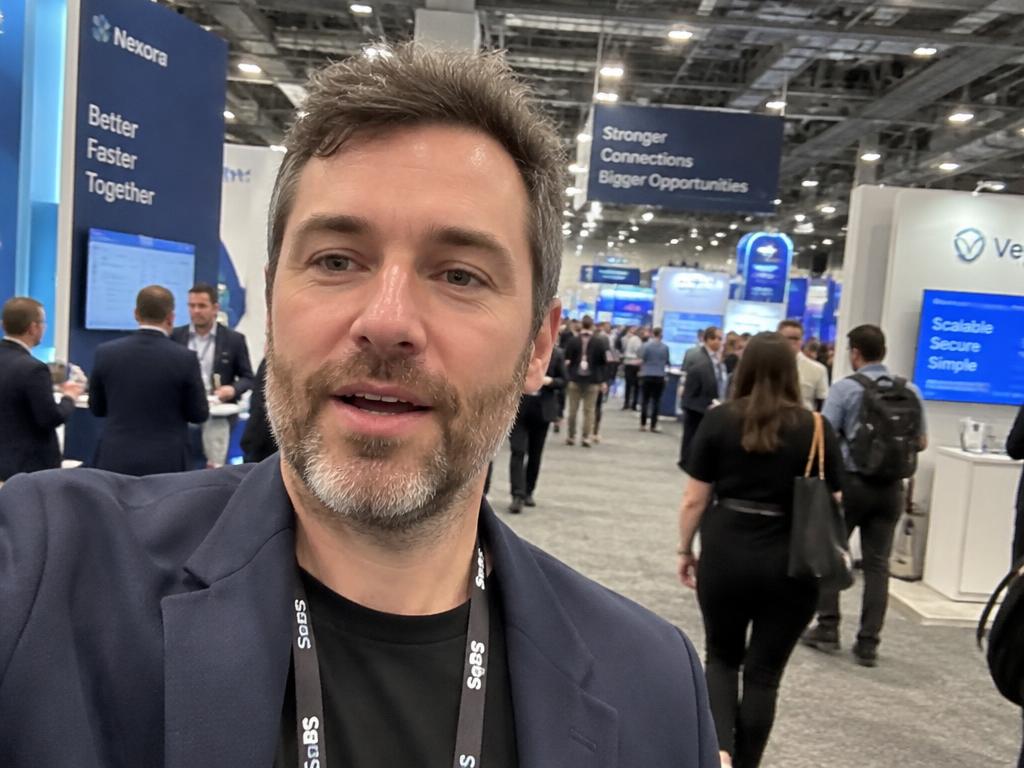
The founder talking straight to camera
A real face saying something specific gets watched. A logo saying something general gets scrolled past.
How Thought Leader Ads workAlex at Packline
Promoted · Thought Leader Ad
I've spoken to over 40 operations directors this year. Nearly all of them asked me the same thing. "How long is the line down when we switch products?" Most suppliers quote the best case. Ours is 22 minutes on a good day and 40 on a bad one. I'd rather you heard the bad one from me.
The vox pop
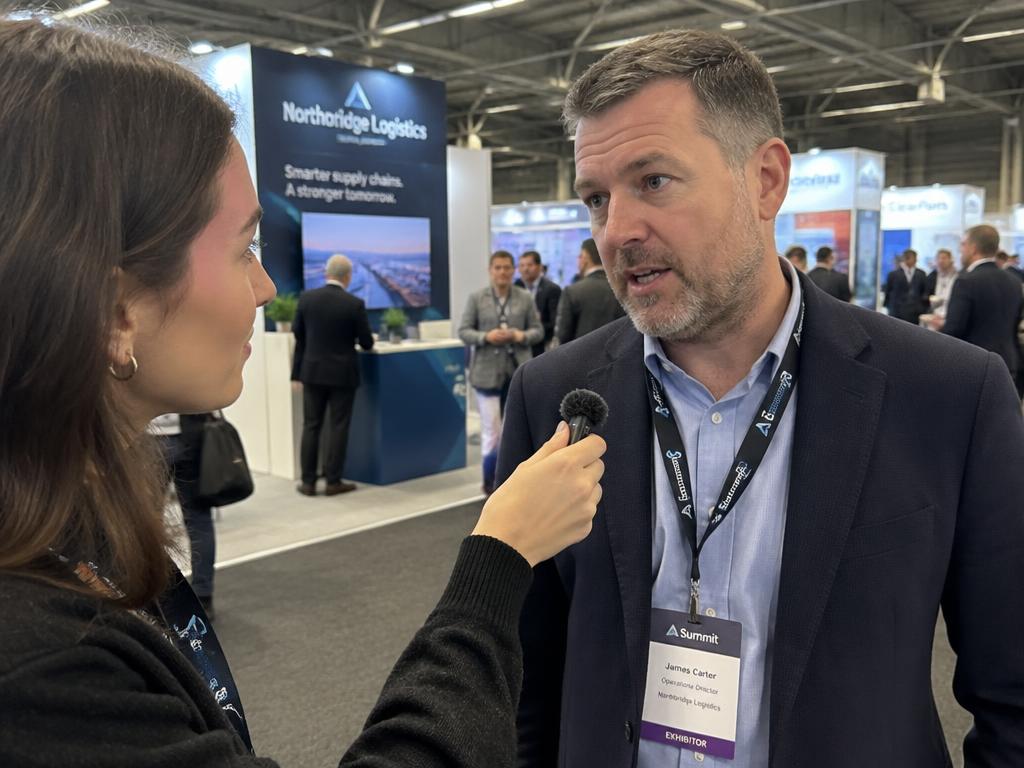
Your buyers want to know what their peers think far more than what you think. Let their peers say it.
How to film vox pops at an eventPackline Systems
Promoted · Video Ad
We asked 14 operations directors one question. "What does your machinery supplier never tell you?" Nine gave the same answer. Clip one is the director who didn't hold back.
The advertorial
It looks like a tabloid exposé, not an advert. People click because they want to know what their industry has been getting away with. Your company is the one doing the exposing.
See a full advertorial we builtPackline Systems
Promoted · Single Image Ad
Operations directors are signing off 12-hour shifts. Their packaging lines are working seven. We followed the missing five hours. Nobody wanted to talk about where they go.
REVEALED: The five hours a day your packaging line is quietly throwing away
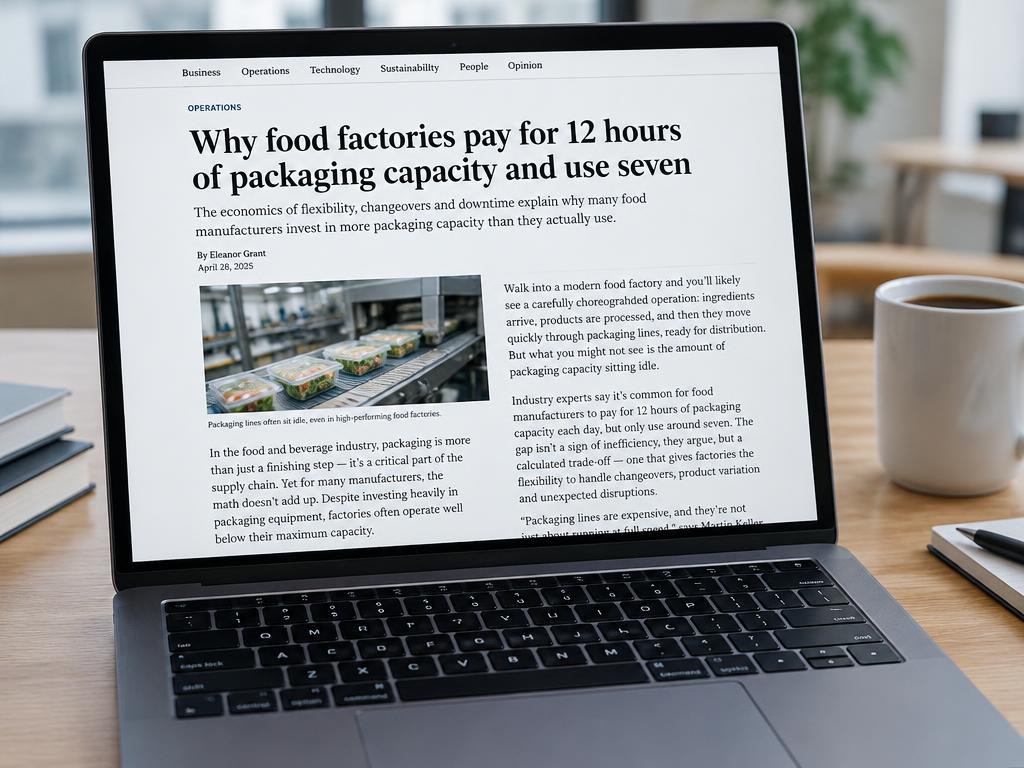
"Nobody budgets for it." What 14 operations directors admitted when we asked where their line time really goes, and the one question suppliers hope you never ask.
The video sales demo
Your best demo, filmed once, pitching for you 24/7. Every prospect sees the same polished walkthrough your best person gives on their best day.
The B2B video ad blueprintPackline Systems
Promoted · Video Ad
This is the demo our best engineer gives in person, filmed properly. Three minutes. The full changeover, the numbers it saves and the question everyone asks at the end. Watch it before you book anything with anyone.
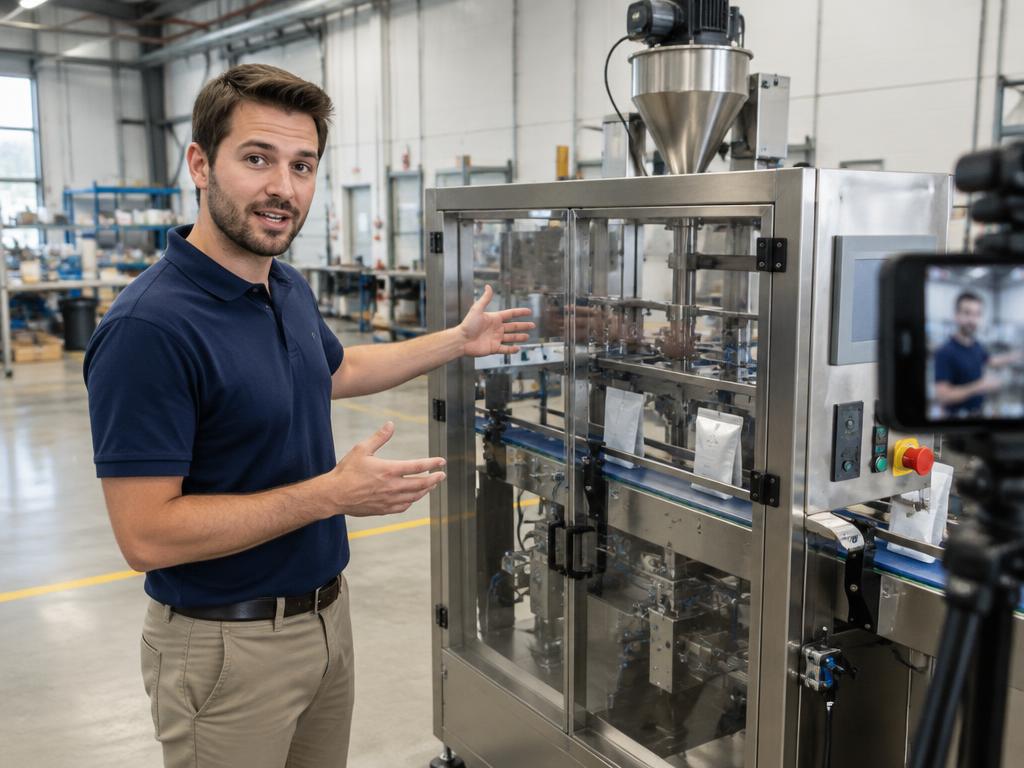
The engineer who answers the awkward question
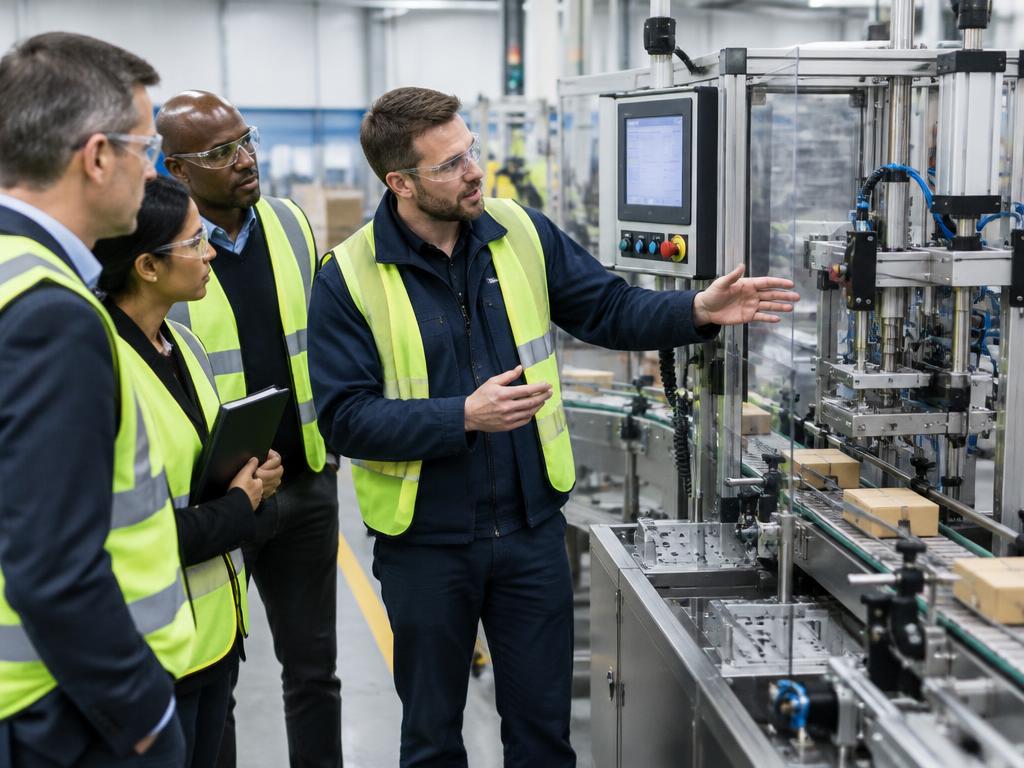
Buyers trust the person who fixes the machine more than the person who sells it.
What makes a B2B advert stop the scrollMaya, Field Engineer at Packline
Promoted · Thought Leader Ad
A buyer asked me what breaks first on our machines. The sales team went quiet. I told him. It's the film sensor, usually around month 14, and it takes me 20 minutes to swap. Here's the video.
The direct message
Once a company has watched, read and visited, a short message from a real person feels like a follow-up, not a cold pitch.
LinkedIn ad formats rankedAlex at Packline
Your changeover numbers
If you did film at the show: how two days feeds a whole year
Most exhibitors film a few clips, post them once and forget them. If you captured footage, it's the most valuable thing you brought home after the list. Here is how we stretch it. If you didn't, the section above covers you.
Two days on the stand
One founder clip a day, 10 vox pop answers, a phone demo of the machine running, the five questions everyone asked.
Month 1
Cut the vox pops into separate clips. Turn the five questions into five short founder posts.
Months 2 to 4
Write the advertorial from what you heard. Film the engineer answering the question sales dodged.
Months 5 to 8
Film a customer switch. Turn the most common objection into a checklist or tool.
Months 9 to 12
Recut the best performers. Run the timing message as budgets open. Then go to the next show with a list of companies that already know you.
Go deeper: The trade show LinkedIn playbook: what to capture on the day
Go deeper: Use the free Anti-Ad Builder to find a stronger angle
Go deeper: Write your founder and vox pop scripts with the free video script generator
What this can become
A machinery manufacturer made the event investment work all year
One specialist machinery manufacturer came to us after years of relying heavily on trade conferences. The events put them in the right room, but the business still had to wait for buyers to remember them afterwards. Google was producing very little and a lead cost more than £300.
15X
return on ad spend
£55
cost per lead, down from £300+
17
new customers
£1.3m+
revenue attributed over five years
The change
From isolated event bursts to an always-on system
We combined Google Search, LinkedIn Ads and Facebook retargeting. Plant managers and engineering buyers could find the company when searching, see it when they were not searching and come back after visiting the website.
The events still mattered. They supplied conversations, market intelligence, relationships and useful material. Advertising stopped all of that disappearing when the exhibition hall closed.
Over five years, less than £250,000 in ad spend was attributed to more than £1.3 million in revenue. The 17 new customers were worth at least £26,000 each. This is the larger point: one extra machinery customer can cover a long period of precise, always-on advertising.
Read the full machinery manufacturer case studyThe evidence
Why repetition matters
9 of 14
booked calls had seen our retargeting ads at least four times first
In a 90-day LinkedIn campaign for a regional IT managed service provider, 14 prospects booked discovery calls. Nine of them had been shown retargeting adverts at least four times before they booked.
The first advert got their attention. The repeated ones kept the business in mind during the weeks it took them to be ready. After an event, the same thing applies to every company on your list.
Go deeper: Read the full IT MSP case study
The numbers
What it costs
Put in roughly what your last show cost, including the stand, travel, staff time, printing and hotels.
Spread over 12 months, that's
£1,250
a month
First test
£300/mo
in ad spend is enough to see how your list responds.
1,500 to 2,000 companies
£1.5k to £3k/mo
in ad spend is what we typically plan for a list this size.
Management by us
From £1,250/mo
for the list, audiences, adverts and reporting.
LinkedIn costs more per click than most platforms because you're paying to reach exact companies and roles. With a small, well-chosen list, you're paying to reach the same few hundred companies repeatedly. The commercial question is not whether the click is cheap. It is whether one additional customer would pay for the programme.
The pipeline
Connect the adverts to the live deals
A list from the event is only the starting point. We also connect the work to HubSpot, Salesforce, Pipedrive or the CRM your sales team already uses. That lets us build audiences from live opportunities, past enquiries and dormant accounts, then show sales which companies are seeing and responding to the campaign.
This is how the loop works:
CRM
Open deals, old opportunities, target accounts and sales stages
Reach the buying committee at those companies with the right message
Sales follow-up
Return company engagement and stage movement to the team
LinkedIn reports engagement by company. We match that with the live pipeline and give sales a short, useful list each month:
| Company | People reached | Engagement | Site visits | Next step |
|---|---|---|---|---|
| Company A | 14 | 6 | Call this week | |
| Company B | 9 | 4 | Call this week | |
| Company C | 11 | 1 | Send case study | |
| Company D | 6 | 0 | Keep warming | |
| Company E | 3 | 0 | Keep warming |
Illustrative layout. Company names and figures are placeholders.
We keep two numbers separate. Direct pipeline is tied to a tracked form, booking or lead. Influenced pipeline shows that people at a live opportunity were reached while the deal was moving. Exposure is not proof that advertising caused the deal, but it does tell sales where the campaign is present and where there is still a gap.
This can help old opportunities move again
For one technical software client, targeted advertising reached hundreds of companies already sitting in the CRM. Within about four weeks, multiple long-stalled six-figure opportunities had moved to proposal while their companies were among the most heavily reached. The media spend was under £3,000 a month. That is influence, not a claim that the adverts closed those deals alone.
Go deeper: How we track LinkedIn Ads in HubSpot
Go deeper: How company-level matching proves pipeline influence
Avoid these
Mistakes that waste the budget
Leaving Audience Expansion switched on
It's on by default and sends your adverts to people outside your list. For this kind of campaign, switch it off.
Running the event recap for months
"Great to see you at the show" stops working after two or three weeks. Move on to proof and objections.
Judging it on leads in week two
Buying decisions can take months. Judge it on companies engaging, conversations and pipeline over your normal sales cycle.
Using only polished corporate adverts
A real person from your team usually gets more attention than a designed banner. Test both.
Adding irrelevant companies to make the audience bigger
Two hundred of the right companies are worth more than thousands of the wrong ones.
Go deeper: What nobody tells you about LinkedIn Ads
Watch
Watch the setup
Uploading a company list to LinkedIn
Running Thought Leader Ads
Go deeper: More LinkedIn targeting tactics for B2B
Just been to a show, or have one coming up?
Send us the event list and, if useful, the live pipeline from your CRM. We'll show you who LinkedIn can reach, what the first three months of adverts could look like and how we would report direct and influenced pipeline. If there's a fit, you'll get a proposal.
- Company list built and matched
- Adverts made from your real expertise
- CRM and company engagement matched
FAQs
How do you use LinkedIn Ads after a trade show?
Upload the companies from the event as a company list, add the job titles that make buying decisions, upload your badge scans as a contact list and retarget anyone who visits your website. Then rotate different advert styles to the same audience for up to 12 months: founder clips, vox pops, demos, customer stories, checklists and direct messages.
What is ABM?
Account-based marketing. Instead of trying to reach as many people as possible, you pick the specific companies you want as customers and focus your marketing on the people at those companies.
Can LinkedIn show ads only to specific companies?
Yes. You upload a list of company names, LinkedIn matches them to company pages and your adverts only show to members who work at those companies.
Can I upload my badge scans to LinkedIn?
Yes, as a contact list of email addresses. LinkedIn matches them to profiles. Only upload data you have a lawful basis to use.
What's the minimum audience size?
LinkedIn needs at least 300 matched members before it will run ads to an audience. A small list of badge scans won't run alone. Build the audience from your named companies instead: add them to the audience manually and segment by the job titles that buy. That gets you over the 300 without padding the list with irrelevant companies.
Is it too late if the show was a few weeks ago?
No. Start with the companies and content you already have. The follow-up phase just becomes shorter.
We attended but didn't exhibit. Does this still work?
Yes. The published exhibitor and speaker lists are still a strong company list, and any conversations you had count too.
How much should we spend on LinkedIn Ads?
Around £300 a month is enough for a first test. For a list of about 1,500 to 2,000 companies, we usually plan £1,500 to £3,000 a month in ad spend.
Why is LinkedIn more expensive than other platforms?
You're paying to reach exact companies and job titles. For a small, high-value market, that precision usually costs less overall than cheaper clicks from the wrong people.
What are Thought Leader Ads?
A LinkedIn ad format that promotes a real person's post, such as your founder's or an engineer's, to the audience you choose.
What are Conversation Ads?
Adverts delivered as messages to LinkedIn inboxes, with buttons people can click to choose what happens next.
How do I know which companies are engaging?
The Company Engagement report in LinkedIn Campaign Manager shows engagement by company for the companies on your list.
Should I switch off Audience Expansion?
Yes. It shows your adverts to people outside your chosen companies, which defeats the purpose of an account-based campaign.
Does this replace going to events?
No. The event gives you the list, the content and the first conversation. LinkedIn Ads keep that investment working for the rest of the year.
What content should we capture at the show?
Short clips answering visitors' questions, quick demonstrations, your founder's view on the event and photos of real conversations. It's enough to feed several months of adverts.
Can Evergreen run this for us?
Yes. We build the company list, the audiences, the adverts and the monthly company engagement reporting. Book a call and we'll look at your market and your event list.
Related: week-by-week LinkedIn event playbook · B2B event amplification guide · marketing to a tiny target market · pricing